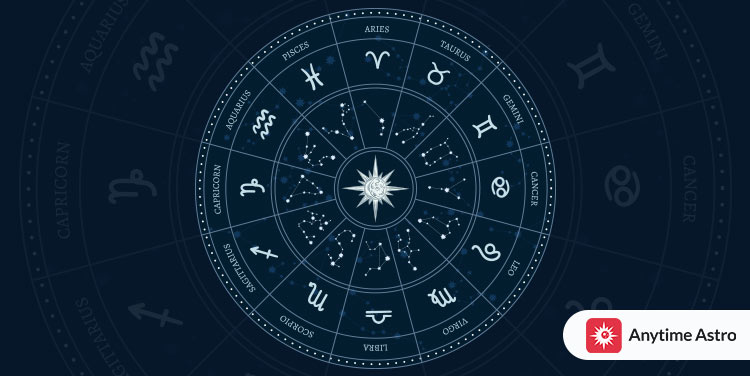
We all land on this planet with a map! The Moon and stars map your life, shaping your nature, temperament, and potential the moment you are born. This map is the Nakshatra, a combination of two terms, Naksha, meaning map, and Tara, meaning a star. Together, Nakshatra means mapping of stars. Also, Tra means “to guard” or “to protect,” making Nakshatra a celestial map of the powerful bodies in the sky or lunar mansions that influence and protect a person on Earth.
A Vedic term mentioned in the Rig Veda, Yajurveda, and Atharva Veda, Nakshatra denotes a group of stars or constellations that form a special angle with the Moon when the Moon travels throughout its cyclical, monthly orbit around the Earth. The Moon takes approximately 27.3 days to complete one round around the Earth, traversing 27 main star constellations, mirroring the harmony between destiny, time, and human existence. Thus, the answer to the question “how many Nakshatra are there in astrology?” is 27 Nakshatras.
Before we go deep into the details of the 27 Nakshatras, as explained by our expert astrologers, let’s look at these Nakshatras and their basics.
Nakshatra Origin and Mythology
The history of Nakshatras traces back to the Atharva Veda. The last of the four Vedas, the Atharva Veda, has a mention of 28 lunar mansions. The Chinese calendar system, too, mentions 28 lunar mansions, which they call hsiu.
Other texts of the Vedic era, such as the Shatapatha Brahmana and the Taittiriya Samhita, mention 27 Nakshatras. The Vedic year consisted of 12 months, with each month of 30 days, totalling 360 days, and the difference in the Nakshatra system was solved through intercalation, i.e., adding an extra month called Adhika Maas to align the shorter lunar year (354 days) with the longer solar year (365 days). It balances the two cycles, as a lunar month (the time the Moon takes to complete a cycle through all Nakshatras) is nearly 29.5 days. 12 of these lunar months total to about 354 days, falling approximately 11 days short of a solar year.
As for the 28th Nakshatra, Abhijit, one of the original Nakshatras, was later discarded when the concept of Nakshatra Padas came up for more specificity.
Mythologically, Nakshatras are recounted in the Mahabharata (a Hindu epic). According to the epic, the Nakshatras are Daksha’s daughters. Daksha is one of the sons of the god Brahma. All of Daksha’s daughters are married to the Moon (Chandra). But the Chandra favors only one of these daughters, named Rohini. When the other daughters complain to Daksha about the favoritism, Daksha curses Chandra to weaken and become shrunken.
As the Moon dims, the herbs dry up, afflicting the animals. Then, the gods intervene and ask Daksha to remove the curse. Since Daksha could not withdraw the curse fully, he changed it, making the Moon wax and wane every month, resulting in the Moon’s phases. To change the curse, Daksha made the Moon promise to spend time equally with his 27 wives (Nakshatras), thus explaining the Moon’s cycling into all the Nakshatras.
While Nakshatras have a profound mythological and historical significance, culturally, Nakshatras in ancient Indian culture were used to predict the successful outcome of any sacrifice or ritual, based on the Moon’s position. Nakshatras were also critical in the naming of a child. Each Nakshatra is associated with a specific sound or syllable, based on which people name their children. Also, Nakshatra compatibility for marriage is an important factor that astrologers consider to determine the chances of a successful marriage between a prospective bride and groom.
The characteristics of Nakshatra, including the gender (Ashwini, Jyeshta, Bharani, Pushya, Uttara Phalguni, Uttarashadha, Ashlesha, Magha, Swati, Mula, Shravana, Purvashadha, and Purva Bhadrapada are male Nakshatras, and Krittika, Purva Phalguni, Punarvasu, Rohini, Ardra, Chitra, Mrigashirsha, Hasta, Vishakha, Uttara Bhadrapada, Anuradha, Dhanistha, Shatabhishak, and Revati are female Nakshatras), Deva, Manushya, and Rakshasa temperaments, associated animals, and guna (energy), impact how your Nakshatra influences your life.
Astrologically, according to our expert astrologers, the study of Nakshatra is crucial in Vedic astrology. It helps find out an individual’s thoughts, perspectives, and understanding of life, in addition to several other factors that make Nakshatras important in astrology.
Why Are Nakshatras Important in Astrology
Nakshatras are important in astrology to determine your innate personality, find your Dasha period (The Dasha is a planetary period that determines when the major life events, opportunities, or challenges will unfold in your life), find the Muhurta or auspicious timing of significant events, for example, vehicle or gold purchase, Kundali matching for marriage, and baby naming.
- Janam Nakshatra: Your birth star, or the Janma Nakshatra, is the Nakshatra where the Moon was present at the exact moment when you were born. In Malayalam, it is called the Janma Nakshtram, and in Tamil astrology, it is called the Janma Natchathiram. Astrologers generate accurate forecasts and analyses using the Nakshatra readings to reveal the secrets of your personality, emotional nature, and habitual patterns.
- Muhurta: Indian astrologers have used Nakshatras for centuries to select auspicious dates and timing, i.e., Muhurta, for vehicle purchase, buying gold, launching a new business, weddings, Griha Pravesh, and other crucial events. Pushya, Ashwini, Chitra, Anuradha, and Revati, for example, are the most auspicious Nakshatras to start a new business.
- Vimshottari Dasha: Vimshottari Dasha is one of the most powerful predictive tools in Vedic astrology. It is a 120-year planet cycle that begins with your Janma Nakshatra. Based on your Janma Nakshatra, astrologers calculate the Vimshottari Dasha or planetary periods active in your life to make accurate forecasts for your relationships, career, spiritual growth, and health.
- Baby Naming: In Hindu tradition, the first syllable of the name of a child is selected based on the Pada of their Janma Nakshatra. It aligns the baby’s identity with the powerful cosmic forces that are active at the exact moment of birth.
- Kundali Matching: Astrologers study Nakshatras in the Kundli matching to understand the compatibility between a prospective couple.
How Many Nakshatra Are There in Astrology
Astrology has 27 Nakshatras. 27 is the standard Nakshatra count in astrology, both Vedic and Hindu astrology, for all purposes. Earlier, in an older system, there were 28 Nakshatras, which included the Abhijit star. But the Vimshottari Dasha system uses only 27 Nakshatras for almost all calculations.
These 27 Nakshatras start at Ashwini at 0° Aries and end at Revati at 30° Pisces. It covers the whole zodiac without anygapsor overlaps.
To answer all your questionsinone place without any confusion:
- How many Nakshatras are there in Indian Vedic astrology? 27 Nakshatras, 28 with Abhijit included.
- How many stars are there in Hindu astrology? 27 stars, called Nakshatras.
- How many stars are there in Malayalam astrology? 27 stars, called Nakshtram in Kerala customs.
- How many stars are there in Tamil astrology? 27, called Natchathirams.
27 Nakshatras Name, Rashi and Their Symbols
The following table shows the Nakshatra Names across Tamil, Malayalam, and Sanskrit traditions with Rashi in Vedic Astrology, their lord, ruling planet, symbol, and traits.
|
Nakshatra |
Sanskrit Name |
Malayalam Name |
Tamil Name |
Nakshatra Lord or Presiding Deity |
Ruling Planet |
Rashi |
Symbol |
Traits |
|
अश्विनी |
Aswathi |
Aswini |
Ashwin Kumara |
Ketu |
Aries |
Horse’s Head |
Enthusiastic, energetic, born leaders, quick healers |
|
|
भरणी |
Bharani |
Bharani |
Lord Yama |
Venus |
Aries |
Yoni |
Creative, strong-willed, passionate, disciplined |
|
|
कृत्तिका |
Kaarthika |
Karthigai |
Agni |
Sun |
Taurus |
Knife |
Protective, powerful, sharp, ambitious |
|
|
रोहिणी |
Rohini |
Rohini |
Brahma |
Moon |
Taurus |
Cart, temple, banyan tree |
Charming, materialistic, creative, beautiful, artistic, attractive |
|
|
मृगशिरा |
Makeeryam |
Mrigasheersham |
Soma |
Mars |
Taurus |
Deer’s head |
Romantic, curious, imaginative, restless |
|
|
आर्द्रा |
Thiruvaathira |
Thiruvaathirai |
Rudra |
Rahu |
Gemini |
Teardrop, diamond, a human head |
Spiritual, intense, emotional, transformative |
|
|
पुनर्वसु |
Punartham |
Punarpoosam |
Aditi |
Jupiter |
Gemini (1st three phases) Cancer (last phase) |
Bow and quiver |
Well-balanced, optimistic, forgiving, warm-hearted |
|
|
पुष्य |
Pooyyam |
Poosam |
Brihaspati |
Saturn |
Cancer |
Cow’s udder, lotus, arrow and circle |
Responsible, caring, religiously inclined |
|
|
आश्लेषा |
Aayilyam |
Aayilyam |
Sarpas or Nagas |
Mercury |
Cancer |
Serpent |
Mysterious, intense, persuasive, intelligent |
|
|
मघा |
Makham |
Makam |
Pitrs or forefathers |
Ketu |
Leo |
Royal throne |
Authoritative, regal, respects tradition, ambitious |
|
|
पूर्व फाल्गुनी |
Pooram |
Pooram |
Aryaman |
Venus |
Leo |
Front legs of the bed, hammock, fig tree |
Artistic, charismatic, social, fun-loving |
|
|
उत्तर फाल्गुनी |
Uthram |
Uthiram |
Bhaga |
Sun |
Leo (First Phase) Virgo (Second, Third, and Fourth Phases) |
Four legs of the bed, hammock |
Responsible, loyal, supportive, strong leaders |
|
|
हस्त |
Atham |
Hastham |
Saviti or Surya |
Moon |
Virgo |
Hand or fist |
Helpful, resourceful, humorous, hardworking |
|
|
चित्रा |
Chitra |
Chithirai |
Tvastar or Vishwakarma |
Mars |
Virgo (First Two Phases) Libra (Last Two Phases) |
Bright jewel or pearl |
Intelligent, artistic, visionary, stylish |
|
|
स्वाति |
Chothi |
Swaathi |
Vayu |
Rahu |
Libra |
Shoot of plant, coral |
Adaptive, independent, flexible in thinking, social |
|
|
विशाखा |
Visaakam |
Visaakam |
Indra and Agni |
Jupiter |
Libra (First Three Phases) Scorpio (Last Phase) |
Triumphal arch, potter’s wheel |
Determined, ambitious, goal-oriented |
|
|
अनुराधा |
Anizham |
Anusham |
Mitra |
Saturn |
Scorpio |
Triumphal arch, lotus |
Friendly, loyal, cooperative, disciplined |
|
|
ज्येष्ठा |
Thrikketta |
Kettai |
Indra |
Mercury |
Scorpio |
Circular amulet, umbrella, and earrings |
Protective, wise, proud, responsible |
|
|
मूल |
Moolam |
Moolam |
Nirti |
Ketu |
Sagittarius |
Bunch of roots tied together; elephant goad |
Fearless, transformative, deep |
|
|
पूर्वाषाढा |
Pooraadam |
Pooraadam |
Apah |
Venus |
Sagittarius |
Elephant tusk, fan, winnowing basket |
Optimistic, energetic, courageous, persuasive |
|
|
उत्तराषाढा |
Uthraadam |
Uthiraadam |
Visvedevas |
Sun |
Sagittarius (First Phase) Capricorn (Second, Third, and Fourth Phases) |
Elephant tusk |
Principled, relentless, diligent, reliable |
|
|
श्रवण |
Thiruvonam |
Thiruvonam |
Vishnu |
Moon |
Capricorn |
Ears or three footprints |
Disciplined, wise, good listeners, excellent communicators |
|
|
धनिष्ठा |
Avittam |
Avittam |
Eight Vasus |
Mars |
Capricorn (First Two Phases) Aquarius (Last Two Phases) |
Drum or flute |
Rhythmic, generous, successful, musical |
|
|
शतभिषक् |
Chathayam |
Chathayam |
Varuna |
Rahu |
Aquarius |
Empty circle, flowers, or stars |
Mysterious, secretive, visionary, healing |
|
|
पूर्वभाद्रपदा |
Poorattadhi |
Poorattathi |
Ajikapada |
Jupiter |
Aquarius (First Three Phases) Pisces (Last Phase) |
Swords or two front legs of cot, a man with two faces |
Idealists, deep thinkers, intense |
|
|
उत्तरभाद्रपदा |
Uthrattathi |
Uthirattathi |
Ahir Budhyana |
Saturn |
Pisces |
Twins, back legs of a cot, a snake in the water |
Stable, compassionate, spiritually mature, wise |
|
|
रेवती |
Revathi |
Revathi |
Pushan |
Mercury |
Pisces |
Pair of fish, drum |
Fortunate, artistic, gentle, sympathetic |
List of Nakshatras and Their Lord
As per Nakshatra astrology, all the Nakshatras are ruled by a Nakshatra Lord. Each planet is associated with three Nakshatras. Astrologers check Nakshatra lordship to understand the Vimshottari Dasha system. Below is the list of Nakshatras, planets and the Lords associated with them.
|
No. |
Nakshatra |
Nakshatra Lord or Presiding Deity |
Ruling Planet |
|
1 |
Ashwini |
Ashwin Kumara |
Ketu |
|
2 |
Bharani |
Lord Yama |
Venus |
|
3 |
Krittika |
Agni |
Sun |
|
4 |
Rohini |
Brahma |
Moon |
|
5 |
Mrigashirsha |
Soma |
Mars |
|
6 |
Ardra |
Rudra |
Rahu |
|
7 |
Punarvasu |
Aditi |
Jupiter |
|
8 |
Pushya |
Brihaspati |
Saturn |
|
9 |
Ashlesha |
Sarpas or Nagas |
Mercury |
|
10 |
Magha |
Pitrs or forefathers |
Ketu |
|
11 |
Purva Phalguni |
Aryaman |
Venus |
|
12 |
Uttara Phalguni |
Bhaga |
Sun |
|
13 |
Hasta |
Saviti or Surya |
Moon |
|
14 |
Chitra |
Tvastar or Vishwakarma |
Mars |
|
15 |
Swati |
Vayu |
Rahu |
|
16 |
Vishakha |
Indra and Agni |
Jupiter |
|
17 |
Anuradha |
Mitra |
Saturn |
|
18 |
Jyeshta |
Indra |
Mercury |
|
19 |
Mula |
Nirti |
Ketu |
|
20 |
Purvashadha |
Apah |
Venus |
|
21 |
Uttarashadha |
Visvedevas |
Sun |
|
22 |
Shravana |
Vishnu |
Moon |
|
23 |
Dhanistha |
Eight Vasus |
Mars |
|
24 |
Shatabhishak |
Varuna |
Rahu |
|
25 |
Purvabhadrapada |
Ajikapada |
Jupiter |
|
26 |
Uttarabhadrapada |
Ahir Budhyana |
Saturn |
|
27 |
Revati |
Pushan |
Mercury |

Which is your Nakshatra? Let’s help you find out by your date of birth.
How to Find Nakshatra by Date of Birth
You can find your Nakshatra with your exact date of birth, time of birth, and place of birth. When you chat with an astrologer online, they use these birth details to create your horoscope to look at the position of the Moon when you were born to identify your Nakshatra.
Knowing your Janma Nakshatra or birth star according to your birth chart gives you an accurate picture of your future forecasts, helps find the best life partner, reveals your personality traits, helps understand how specific planets and planet transit affect your life, predicts the planetary dasha outcomes, and determines the status of a particular day.
Nakshatras are powers in the sky that bring good and bad times in your life. A clear understanding of Nakshatras can help you decode your emotional patterns, time-significant events in your life, and make the right decisions in your personal and professional life.
What is a Nakshatra?
Nakshatra is a group of stars or constellations that influence a person’s life from the moment they are born with the Moon at a certain angle. The Nakshatra names were first found in the Vedanga Jyotisha, which is one of the oldest Indian texts that dates back to the last century.
In Vedic astrology, a Nakshatra is defined as a lunar mansion,a specific section of the sky through which the Moon moves as it completes its cycle every month.
The Moon regulates the Nakshatras and takes approximately 28 days to travel from one zodiac sign to the next. Moreover, the Moon stays in a Nakshatra for about one day and is nearly 13 degrees and 20 minutes long. Methodically, within the 360° zodiac, from Ashvini Nakshatra at 0° Aries to Revati at 30° Pisces, every Nakshatra spans 13°20’.It creates 27 equal segments of the complete 360° ecliptic. Each section is then divided into four Padas or quarters of 3°20′. These 27 Nakshatras and 4 Padas make a total of 108 Padas (27 X 4 = 108). 108 is the number of sacred beads, Japa malas, deeply rooted in Hindu cosmology to connect with the divine.
The Nakshatra Structure: Padas, Rashis, and Planetary Lords
Each Nakshatra has four Padas, is spread across the 12 zodiac signs, and isgovernedby one of the nine planets: Ketu, Venus, Sun, Moon, Mars, Rahu, Jupiter, Saturn, and Mercury.
- Padas: Nakshatras are divided into four padas, foot steps, or a quarter-division of a lunar mansion. Each of these padas covers 3 degrees and 20 minutes. Moreover, the total 108 padas (4 for every 27 Nakshatras) correspond to specific zodiac signs in the Navamsa chart. A Navamsa is the ninth division of every zodiac. Astrologers consider these padas as a starting pointto define the Nakshatras personality traits and your destiny.
- Zodiac Signs (Rashis): The 27 Nakshatras are spread across the 12 Rashis or zodiac signs. Since 27 is not evenly divisible by 12, each Rashi has 2.25 Nakshatras. For example, Sagittarius (Dhanu) has 4 padas of Mula Nakshatra, 4 padas of Purva Ashadha, and the first pada of Uttara Ashadha Nakshatra.
- Planetary Rulers: One of the nine Navagrahas, Ketu, Venus, Sun, Moon, Mars, Rahu, Jupiter, Saturn, and Mercury, govern each Nakshatra.Theplanetaryrulersrepeatthree times across the 27 Nakshatras. The ruling planet of your Nakshatra defines your karmic inclinations, strengths, and temperament. For example, Saturn, the ruler of Anuradha Nakshatra, makes these natives highly disciplined.
While Nakshatras look like the zodiac, they arean entirely different concept.
Unlike the Western zodiac, which considers the Sun’s journey through 12 signs, Nakshatras track the Moon’s journey. Let’s understand the difference.
How Are Nakshatras Different from Zodiac Signs?
Think of zodiac signs as the blurb or summary of a book, and Nakshatras as the whole book, i.e., more detailed. The 12 zodiac signs, Aries, Taurus, Gemini, Cancer, Leo, Virgo, Libra, Scorpio, Sagittarius, Capricorn, Aquarius, and Pisces, are based on the Sun’s path (apparent) through the sky, called the ecliptic. Each sign covers approximately 30 degrees of the Sun’s path. Western astrology uses these zodiac signs to describe a person’s general personality characteristics, including their strengths, challenges, and life theme. The zodiac signs help you understand your Sun sign’s broad personality and ego, core motivations and life tendencies, compatibility with other zodiac signs, and your birth chart’s foundational energy.
On the other hand, Nakshatras is a deeper dive, a complete book. Vedic astrology divides the zodiac signs into 27 parts. It is much like expanding a point in a summary or blurb into many sub-points to make the whole idea and details clearer. Each of these granular divisions offers a detailed map of the universe and how it influences our lives.
For example, suppose your zodiac sign is Aries. The Aries zodiac is impulsive and energetic. These are the general traits. But if your Moon is in Ashwini Nakshatra (ruled by Ketu), which is associated with quick healing and action, you may be a lot different from someone with Bharani Nakshatra (ruled by Venus), which is associated with transformation and creation, despite sharing the same zodiac sign.
Thus, Nakshatras refine the zodiac meanings for an accurate analysis of your personality, life events, and karmic patterns.
With a clear understanding of Nakshatras, let’s understand all 27 Nakshatras in detail with insights from our expert astrologers.
27 Nakshatras Characteristics Explained
Here are all the 27 Nakshatras explained in order, with their characteristics.
1. Ashwini Nakshatra
The first of 27 Nakshatras, Ashwini, is an auspicious Nakshatra, represented by brightly shining stars in Aries. Also called Asvayuj, the Ashwini Nakshatra natives are dynamic and attractive, happy-go-lucky people, spontaneous, skilled, and committed at work, and gentle. But they are also impulsive, good starters but not good finishers, prone to sudden loneliness, delusion, and depression. Willing to sacrifice all their needs for their loved ones, they are the most compatible with Bharani and Magha Nakshatras.
2. Bharani Nakshatra
Bharani Nakshatra denotes the feminine aspects of nature. The individuals born in the Bharani Nakshatra are beautiful, extreme (swing between contradictions, such as Evolved and Unevolved, Naivete and Wisdom), curious and passionate, more intuitive than rational, full of creativity with good self-control, and show an active approach towards things. Poised and extremely caring, the natives of Bharani Nakshatra are the most compatible with Ashwini and Purva Phalguni Nakshatras.
3. Krittika Nakshatra
Krittika Nakshatra’s lord, Agni, is the creator and destroyer of our superficial mental and emotional instincts. It reflects power, energy, and a caring and nurturing personality. Individuals born under this Nakshatra are perfectionists, intimidating yet diplomatic and graceful, excellent leaders, have strong likes and dislikes, extremely fiery, spiritually inclined, and short-tempered. Lucky in their married life, they have strong compatibility with Pushya and Anuradha Nakshatras.
4. Rohini Nakshatra
Guided by the supreme creator, Brahma or Prajapati, Rohini is the brightest constellation. Blessed with expressive eyes and beautiful lips, the Rohini Nakshatra natives are very creative and imaginative, though they may not always express themselves verbally; these people have high patience and endurance (though their decisions change frequently). On the negative side, they may have some selfish tendencies. But they genuinely value their close ones and are the most compatible with Mrigashira and Hasta Nakshatras.
5. Mrigashira Nakshatra
Also called Saumya, i.e., benevolent, Chandra or Udupa, i.e., the Moon; and Arghayani, i.e., the start of the year, the Mrigashira Nakshatra reflects the cosmic intelligence of Soma, an immortal drink with a soft nature. Thus, the Mrigashira Nakshatra natives are gentle, delicate, and happy people, kind, attractive, and full of energy. They are also highly curious with a quick grasping power, lighthearted, and good in academics. But they can also be highly suspicious, disillusioned, dissatisfied, and erratic. As for marriage compatibility, they can build a strong relationship with Chitra and Revati Nakshatras.
6. Ardra Nakshatra
The sixth of the 27 Nakshatras, Ardra Nakshatra, literally means moist or tearful, denoting deep emotions. People born under this Nakshatra have unique physical characteristics, such as curly hair, a thoughtful expression, and a large face. They have a childlike sense of amusement and joy, are intelligent and curious, never back down from challenges, and are strong and assertive. But they may experience problems in balancing their mental and emotional states. Deeply soft and caring at heart, Ardra natives are the most compatible with Swati and Satabhisha Nakshatras.
7. Punarvasu Nakshatra
The 7th Nakshatra, Punarvasu Nakshatra, ruled by Jupiter, represents abundance and wisdom. Naturally optimistic and inclined towards care and harmony, these natives are calm and composed, straightforward, very friendly, emotionally tied to their home country and family (while not being afraid of leaving what needs to be left), and highly patient. But they find understanding complicated situations challenging, lack foresight, and can be reckless. Powerful, energetic, and a firm believer in the philosophy of “give and take,” Punarvasu Nakshatra has a strong compatibility with Pushya and Revati Nakshatras.
8. Pushya Nakshatra
The eighth of all Nakshatras, Pushya Nakshatra is a truly special Nakshatra that radiates a comforting, warm, and caring energy. The people born in this Nakshatra are poised, gentle, positive, helpful, generous, and believe in respecting and getting respected by others. Moreover, they are very growth inclined in all spheres of life, push their limits to achieve challenging goals, and are highly spiritual, dependable, and reliable. Blessed with Brahma’s creative powers and lovely, calm, and kind souls, the Pushya Nakshatra natives have a high compatibility with Anuradha and Uttara Bhadrapada Nakshatras.
9. Ashlesha Nakshatra
An interesting combination of intuition, mystery, and transformation, the Ashlesha Nakshatra natives have broad and thin lips, square-shaped faces, and round, small, and bright eyes. While they may not have very attractive features, they use their snake-like movement to attract others, have intuitive abilities, excellent observing power, present themselves as social and friendly (can become cold and ruthless once they get what they want), curious, highly meditative, suspicious, paranoid, and clingy. They can form a good bond with Jyeshtha and Swati Nakshatras.
10. Magha Nakshatra
The tenth of the twenty-seven Nakshatras, Magha Nakshatra, is deeply associated with our heritage and ancestors’ wisdom. The natives of Magha Nakshatra have a regal demeanor, preserve legacy, are highly introspective, believers of positive karma, are generous, curious, honest, intuitive, spiritual, and noble with a sense of achievement. They are most compatible with Ashwini and Bharani Nakshatras.
11. Purva Phalguni Nakshatra
The eleventh Nakshatra, Purva Phalguni Nakshatra, represents satisfaction and happiness. Those born in this Nakshatra are attractive and charming, blessed with good luck and fortune, are very social and hospitable, lighthearted, generous, compassionate, career-oriented, inclined towards luxuries and life’s pleasures, and can balance all spheres of life. They are highly compatible with Bharani and Magha Nakshatras.
12. Uttara Phalguni Nakshatra
Uttara Phalguni Nakshatra encourages a sense of responsibility, long-lasting relationships, and social harmony. The natives of this Nakshatra have a strong and dynamic personality, are independent and self-reliant, ambitious, reliable, charitable, spiritual, wise, sensible, brave, and fearless. They match well with Hasta and Revati Nakshatras.
13. Hasta Nakshatra
Signifying the Sun’s creativity, the Hasta Nakshatra natives are beautiful, mischievous, enthusiastic, attentive, have high concentration power, great at manifestation, intuitive, receptive, highly adaptive to any situation, outwardly confident but insecure at times, and surrounded by difficulties but unwilling to fight or indulge in challenges. Quick, sharp, and lighthearted, they are the most compatible with Chitra and Rohini Nakshatras.
14. Chitra Nakshatra
The fourteenth and brightest Chitra Nakshatra can be seen with the naked eye, denoted by a single star, called the “star of opportunity.” The Chitra star is the Virgo constellation’s lower portion. Those born in this Nakshatra are blessed with a charming and attractive personality. They attract attention and admiration with positivity, are fascinated by beauty, intuitive, intelligent, skillful, and orderly. They are also considerate, calm, good-mannered, highly self-conscious, crave name and fame, and are excellent storytellers. Energetic, dynamic, and passionate, Chitra Nakshatra is extremely compatible with Swati and Hasta Nakshatras.
15. Swati Nakshatra
Represented by the “young plant shoot blown by the wind,” the Swati constellation denotes airy quality and delicacy. Physically slim, tall, and attractive, the people born in the Swati Nakshatra love socializing, are religious and god-fearing, proactive, generous, respect others, and expect the same, and hate criticism. Having a strong love for freedom, liberty, and independence, Swati Nakshatra is the most compatible with Ardra and Punarvasu Nakshatras.
16. Vishakha Nakshatra
Associated with marriage, ceremonies, triumph, and victory, the Vishakha Nakshatra natives can become restless to succeed in their endeavors. Looking fiery with sharp features, the natives of this Nakshatra are highly focused, great communicators, truthful, apt at manifesting their goals, value justice, and participate in both personal and professional partnerships with all their heart. They share a strong relationship with Anuradha and Mula Nakshatras.
17. Anuradha Nakshatra
Representing power and protection, the people born in Anuradha Nakshatra have a tough appearance that hides their emotional and sensitive nature. These natives are full of love, romance, friendship, and passion. They respect everyone and desire the same respect, are truthful, set high performance standards, rebel against outdated ideas and perspectives, devoted and ritualistic, have heavy responsibilities, and duties. In love and relationships, they are the most compatible with Pushya and Uttara Bhadrapada Nakshatras.
18. Jyeshtha Nakshatra
According to our senior astrologers, Jyeshtha was the final constellation of the 18 known Nakshatras in the ancient period. People born in this senior or Jyeshtha Nakshatra have a well-proportioned body, are authoritative and power-loving, charitable, generous, kind, responsible, extremely dedicated to their work, grounded, open-minded, sober, punctual, outspoken, tolerant of ambiguity, and practice good governance. While they can be angry, sad, selfish, and engage in infidelity, they have a high compatibility with Ashlesha and Revati Nakshatras.
19. Mula Nakshatra
Mula or Moola Nakshatra is a group of nine stars that form the shape of a Lion’s tail. While Mula denotes the root, center, or innermost core, the people born in the Mula Nakshatra always get into the root or core of everything. They are very investigative, have an excellent ability to overcome challenges, set their own rules, are impulsive, regret their actions, are over-eager, and have specific ways of dealing with situations that often lead to trouble. While they are hard-working, committed to their goals, intelligent, courageous, curious, innovative, and positive, they can be compatible with only a few Nakshatras, including Vishakha and Purva Ashadha.
20. Purva Ashadha Nakshatra
A shy and sensitive constellation, the natives of Purva Ashadha Nakshatra are physically tall, strong, and attractive. Invincible and highly confident in their power and strength, these people are extremely ambitious, adventurous, philosophical, exuberant once they achieve their goals, honest, joyful, lucky, and fortunate. They are also wanderlust and love their freedom, are flamboyant, artistic, and very expressive. While indecisive and an impulsive decision maker, they love with all their heart and have a high compatibility with Mula and Uttara Ashadha Nakshatras.
21. Uttara Ashadha Nakshatra
The Uttara Ashadha Nakshatra denotes final victory and emphasizes attaining the end goal. Those born in this Nakshatra have a well-formed body stature with an attractive personality. They are very positive and introspective, inclined towards new beginnings, perfectionists, growth-oriented, sharp, rational, and spiritual. Blessed with good fortune in their love life, they are the most compatible with Purva Ashadha and Revati Nakshatras.
22. Shravana Nakshatra
Sharavana means listening. That is why natives of this Nakshatra are excellent listeners and learners. They also believe in expanding their knowledge continuously, are great helpmates, proficient in education, responsible, good communicators, reliable, dependable, love cleanliness, and are generous and kind-hearted. Due to their Nakshatra characteristics, they are really compatible with Dhanishta and Anuradha Nakshatras.
23. Dhanishta Nakshatra
Associated with hollowness and music, the Dhanishta Nakshatra natives have a bold and jovial disposition. Insightful and courageous, these people have good organizational skills, are hard-working, ambitious, great multitaskers, wise, intelligent, liberal, and believe in maintaining a congenial atmosphere without troubling anyone. Masters in music and fine arts, these individuals are highly benevolent, social, adaptable, patriotic, dependable, and patriotic. Their qualities make them the most compatible with Shravana and Purva Bhadrapada Nakshatras.
24. Shatabhisha Nakshatra
Ruled by Uranus, Rahu, and Saturn, Shatabhisha Nakshatra represents the apex of the energy of Rahu. The natives of this Nakshatra are fairly handsome with elegant dispositions. They are blessed with excellent healing powers, are hardworking, self-dependent, action-oriented, disciplined, and methodical. Moreover, they are great at keeping secrets with a good memory. In their personal life, they are endowed with a happy married life and are the most compatible with Ardra and Swati Nakshatras.
25. Purva Bhadrapada Nakshatra
Representing a bridge that connects the consciousness on non-materialistic and materialistic panes, the natives of Purva Bhadrapada Nakshatra are peace-loving, unbiased, and extremely intelligent. Truth seekers with a great interest in spirituality, they are god-fearing people. Optimistic, generous, friendly, wise, sincere, hardworking, ambitious, and determined towards their work, they are also very brave and adventurous. Moreover, filled with love, kindness, and compassion, they are highly compatible with Uttara Bhadrapada and Pushya Nakshatras.
26. Uttara Bhadrapada Nakshatra
Uttara Bhadrapada Nakshatra is connected to the Sahastrara or crown center, the pinnacle of the seven chakras. Those born in this Nakshatra are happy, dependable, righteous, truthful, unbiased, good orator, intelligent, determined to achieve their goals, helpful, grounded, great at handling money, calm, energetic, and very secretive. Physically, they are healthy, attractive, shy, short, and most compatible with Revati and Anuradha Nakshatras.
27. Revati Nakshatra
The last of the 27 Nakshatras, Revati Nakshatra, denotes final enlightenment or Moksha, shared morals, beliefs, and ideas. The people born in this Nakshatra are benevolent, pleasing, positive, extremely lucky, soft, tender, attuned to their higher self, intuitive, good communicators, and desirous of being free and independent. On the negative side, they can also be tactless, over-indulgent, jealous, lack initiative, have low self-esteem, be stubborn, insecure, and oversensitive. In personal life, they want care, love, attention, praise, and are most compatible with Punarvasu and Uttara Phalguni Nakshatras.
The characteristics and compatibility of natives alsodependon the Gana (temperament group) their Nakshatra belongs to.
The Three Ganas of Nakshatras: Deva, Manushya, and Rakshasa
All the 27 Nakshatras are categorized into three Ganas or temperament groups, called Deva Gana (Divine), Manushya Gana (Human), and Rakshasa Gana (Demonic).
- Deva Gana: Deva or Divine Gana is generous, spiritually inclined, and has a sattvic temperament. Ashwini, Mrigashira, Punarvasu, Pushya, Hasta, Swati, Anuradha, Shravana, Revati Nakshatras belong to the Deva Gana.
- Manushya Gana: Manushya or Human Gana’s nature is balanced with both spiritual interests and worldly desires. Bharani, Rohini, Ardra, Purva Phalguni, Uttara Phalguni, Purva Ashadha, Uttara Ashadha, Purva Bhadrapada, and Uttara Bhadrapada Nakshatra belong to the Manushya Gana.
- Rakshasa Gana: Rakshasa or Demonic Gana is characterized by its intensity, unconventional behavior, independence, and willpower. Krittika, Ashlesha, Magha, Chitra, Vishakha, Jyeshtha, Mula, Dhanishtha, Shatabhisha Nakshatras belong to the Rakshasa Gana.
Nakshatras Across Various Indian Traditions
The Nakshatra system in India beautifully appears across all traditions. In Tamil astrology, the Natchathirams (27 stars) are used for every significant calculation from the Gowri Nalla Neram system to everyday Rahu Kaal calculations. In Kerala Jyotisha (Malayalam astrology), the Nakshatras are crucial for marriage matching, auspicious timing, baby naming, and all other aspects of life.
All the 27 Nakshatras in astrology are your cosmic map. According to Hindu mythology, the stars and all the zodiac signs represent the native's life. Thus, to bring good fortune and prosperity into one's life, one should seek one’s Nakshatra and Rashi. It is also believed that worshiping the deity who rules over a particular Nakshatra is fortunate for those who were born under its sign. If you are curious to know more about your Nakshatra, you can chat with the astrology experts on our platform.
Frequently Asked Questions
Q1. What are the 27 Nakshatras in order?
Ans. The 27 Nakshatras in order are Ashwini, Bharani, Krittika, Rohini, Mrigashira, Ardra, Punarvasu, Pushya, Ashlesha, Magha, Purva Phalguni, Uttara Phalguni, Hasta, Chitra, Swati, Vishakha, Anuradha, Jyeshtha, Mula, Purva Ashadha, Uttara Ashadha, Shravana, Dhanishta, Shatabhisha, Purva Bhadrapada, Uttara Bhadrapada, and Revati.
Q2. Why only 27 nakshatras?
Ans. The Moon moves in an arc covering 13º 20' every day, taking 27.27 days to complete one round around the Earth. This number is rounded to 27 to determine the 27 Nakshatras. Each of these Nakshatras covers an arc of 13° 20′ of the ecliptic circle.
Q3. What are the 4 Maha Nakshatras?
Ans. The 4 Maha Nakshatras, which are highly potent and spiritually charged, are Ashwini, Magha, Moola, and Jyeshtha.
Q4. How are Nakshatras and Rashi connected?
Ans. Nakshatras and Rashis are related as narrower and broader measurements of the sky. The 12 Rashis are the broad division of the sky. The 27 Nakshatras are a more accurate and minute division (the division of Rashis) to pinpoint the characteristics and traits of a person.
Q5. Which is the most auspicious or powerful Nakshatra?
Ans. Different Nakshatras are powerful or the most auspicious in different areas. For example, Pushya Nakshatra is the best Nakshatra to start a new business venture. Rohini Nakshatra is the best Nakshatra for creativity and prosperity. Uttara Phalguni, Uttara Ashadha, and Uttara Bhadrapada Nakshatras are the best Nakshatras for long-term commitments and stability.
Q6. What is a Janma Nakshatra, and how does it impactmy life?
Ans. The lunar constellation the Moon was traveling through when you were born is your Janma Nakshatra. It determines your instinctive reactions, emotional nature, and how you behave in different situations. In predictive astrology, it is the point where your Vimshottari Dasha begins. Vimshottari Dasha is a planetary cycle of 120 years that governs the timing of important life events.
Q7. Can I perform a Puja for my birth Nakshatra?
Ans. Yes, doing a Puja for the ruling planet and deity of your birth or Janma Nakshatra strengthens the positive effects of your birth star and helps you overcome challenges. For example, if your Nakshatra is Bharani, a Puja dedicated to Lord Yama, the deity of dharma and death) and the planet Venus (Shukra) helps remove karmic obstacles and get blessed with a disciplined, prosperous, and healthy life.


Leave a Comment